
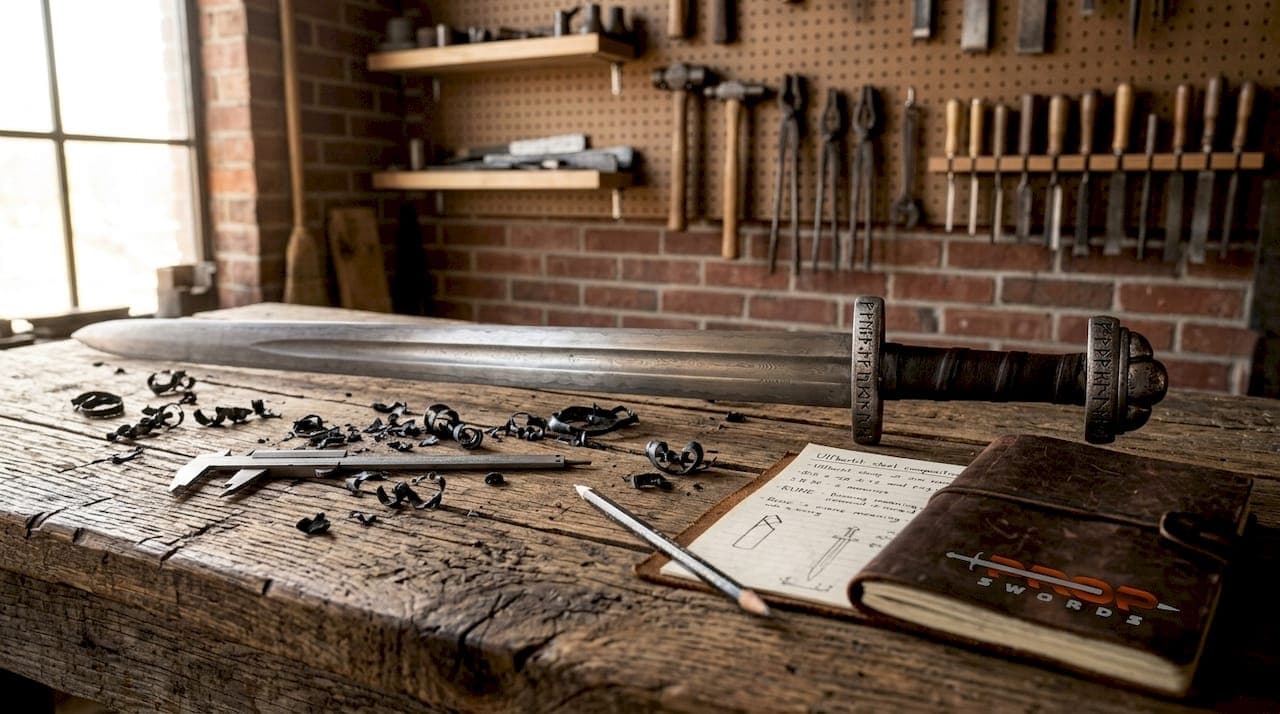
Most people assume Viking sword replicas fall into one of two camps: cheap wall decorations or flawless museum copies. The truth is far more interesting. Viking swords were produced across the 8th to 11th centuries and classified by Petersen's typology, a system that still shapes how modern replicas are designed and evaluated today. Whether you're a serious collector, a cosplayer building an authentic kit, or someone who just fell in love with Norse culture, understanding what separates a quality replica from a glorified prop will completely change how you shop and what you value.
Table of Contents
- What defines a Viking sword replica?
- Key features of authentic Viking sword replicas
- Materials and craft: From ancient iron to modern steel
- Types of Viking sword replicas: Historical, LARP, and fantasy
- How to choose the right Viking sword replica
- Explore Viking sword replicas for your collection
- Frequently asked questions
Key Takeaways
| Point | Details |
|---|---|
| Historical accuracy matters | The most collectible Viking sword replicas follow exact historical dimensions and features. |
| Material choices affect value | High-carbon and pattern-welded steels make for stronger, more authentic replicas but need proper care. |
| Purpose defines the best replica | Choose a historical, LARP, or fantasy version based on how you plan to use or display the sword. |
| Budget for quality | Expect to invest $170 to $1150 for museum-grade hand-forged reenactment swords. |
What defines a Viking sword replica?
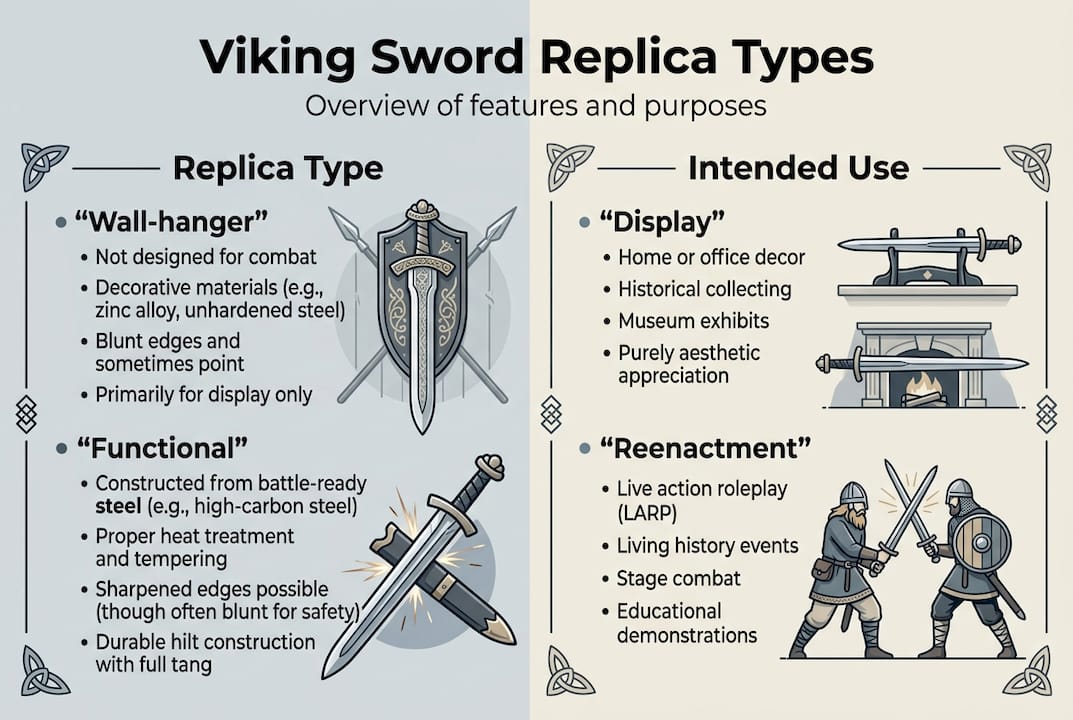
A Viking sword replica is a modern reproduction built to reflect the design, proportions, and function of swords used during the Viking Age. These aren't random fantasy blades. They're modeled after real archaeological finds that researchers have cataloged and studied for over a century. The Petersen classification system organizes these swords into types based on hilt shape, pommel style, and guard design, giving replica makers a precise blueprint to follow.
Not every replica follows that blueprint faithfully, though. The market breaks down into three broad categories:
- Wall-hangers: Decorative pieces made from stainless steel or zinc alloy, built for display only. They look the part but can't handle any real stress.
- Functional replicas: Built with historical proportions, proper steel, and full tang construction. These are made for reenactment, cutting practice, or serious collecting.
- Theatrical and LARP versions: Lightweight, often foam or blunted steel, designed for safe stage combat or live-action roleplay.
The difference between a replica and an original artifact is intent. Originals were tools of war and status symbols. Replicas serve collectors, enthusiasts, and performers. You can explore authentic Viking sword examples to see how closely modern makers track historical designs, and check out this historical sword reproduction guide for a broader look at the craft.
| Replica type | Primary material | Intended use | Accuracy level |
|---|---|---|---|
| Wall-hanger | Stainless steel / zinc | Display | Low |
| Functional replica | High-carbon steel | Reenactment / collecting | High |
| LARP / theatrical | Foam / blunted steel | Combat sport / cosplay | Medium |
| Museum-grade | Pattern-welded steel | Display / study | Very high |
Key features of authentic Viking sword replicas
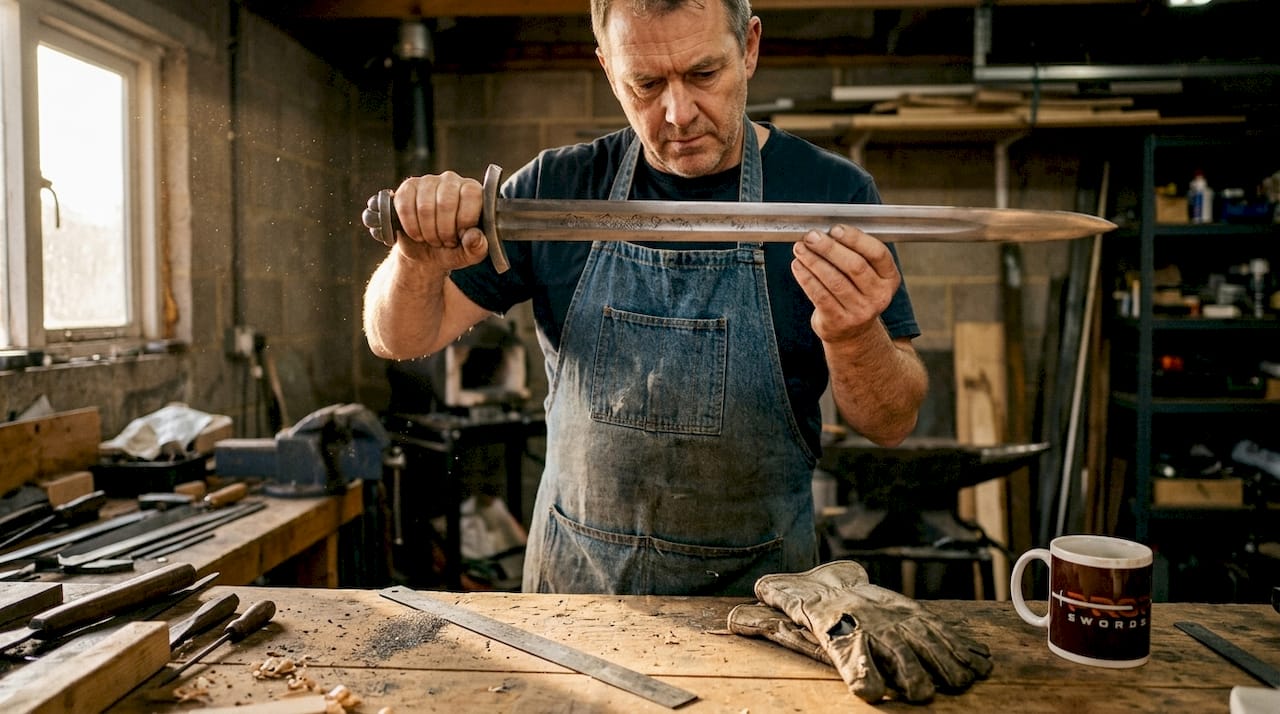
Once you know what category a sword falls into, the next step is evaluating its physical specs. Typical Viking sword dimensions run 84 to 105 cm overall, with a blade length of 70 to 90 cm and a weight between 1.0 and 1.5 kg. The blade is double-edged with a central fuller, which is a groove that reduces weight without sacrificing strength.
For functional replicas, construction details matter enormously. A full tang with proper taper means the blade steel runs the full length of the handle, giving the sword structural integrity under real use. The point of balance (POB) should sit roughly 10 to 15 cm from the guard, which gives the sword that characteristic Viking handling feel: nimble but powerful.
Here's a quick comparison between functional and decorative replicas:
| Feature | Functional replica | Decorative replica |
|---|---|---|
| Tang | Full tang | Partial or rat-tail tang |
| Steel | High-carbon (1075, 5160) | Stainless steel |
| Edge | Sharpened | Unsharpened |
| Heat treatment | Yes | No |
| Balance | Historical POB | Varies |
Visual elements also tell a story. Authentic replicas feature historically proportioned hilts, period-appropriate pommel shapes (wheel, brazil nut, lobed), and sometimes etched or inlaid markings. Explore different replica sword types to see how these details vary across styles.
Pro Tip: Hold the sword at the guard and let it rest on one finger about 10 cm forward. If it balances there, the POB is historically accurate. A blade-heavy sword is a red flag for poor construction.
Materials and craft: From ancient iron to modern steel
Viking Age smiths worked with pattern-welded iron and steel, twisting and folding different iron alloys together to create blades with both flexibility and edge hardness. The result had visible grain patterns and microscopic impurities that actually contributed to the blade's character. Modern replicas can't replicate those exact impurities, but they often use cleaner, more consistent steel that outperforms the originals in edge retention and durability.
Here's how the material options stack up for modern replicas:
- High-carbon steel (1075 or 5160): The gold standard for functional replicas. Holds an edge well, responds to heat treatment, and can be sharpened repeatedly.
- Pattern-welded (Damascus) steel: Visually stunning and historically inspired. Layers of different steels are forge-welded together, creating distinctive patterns. Check out these Damascus steel Viking replicas for a real-world example.
- Stainless steel: Looks clean and resists rust, but it's too brittle for functional use. Fine for display, not for anything else.
- Mild steel: Cheap and soft. Avoid it for anything beyond a costume prop.
"The best modern replicas don't just copy the look of a Viking sword. They copy the feel, the balance, and the behavior under stress. That's where craftsmanship separates a real piece from a decoration."
Carbon steel blades need regular maintenance. Wipe the blade dry after handling, apply a thin coat of oil (mineral oil or camellia oil work well), and store it away from humidity. A custom Damascus steel sword is an investment, and treating it right keeps it looking and performing at its best for decades.
Pro Tip: Never store a carbon steel blade in a leather scabbard long-term. Leather retains moisture and accelerates rust. Use a wooden scabbard with a light oil coating inside.
Types of Viking sword replicas: Historical, LARP, and fantasy
The Viking sword replica market is broader than most people realize. Your purpose should drive your purchase, because a sword built for a museum display case is completely different from one built for a weekend LARP event.
- Historical collector replicas: These prioritize accuracy above everything. Expect Petersen-type hilts, period steel, and documented proportions. They cost more but hold their value.
- LARP and theatrical replicas: Safety is the priority here. Foam versions from makers like Epic Armoury are built for safe combat, not historical accuracy. Blunted steel versions exist for stage work.
- Fantasy and media-inspired replicas: These take visual cues from films, TV shows, and games. The Ragnar Lothbrok replica sword is a great example: it captures the spirit of the show while offering real build quality.
- Ulfberht replicas: These reproduce the famous inscribed blades found across Scandinavia. The inscription is the draw, though the steel quality in replicas varies widely.
| Purpose | Best replica type | Key priority |
|---|---|---|
| Museum display | Historical / museum-grade | Accuracy |
| Reenactment | Functional high-carbon | Durability |
| LARP | Foam or blunted steel | Safety |
| Cosplay | Fantasy / media-inspired | Visual appeal |
| Gift / decor | Wall-hanger | Aesthetics |
If you're drawn to screen-accurate pieces, browse movie replica swords and check out this movie sword comparison to see how different productions influenced blade design.
Pro Tip: If you're buying a media-inspired replica, look for one that also meets functional specs. You get the visual appeal and a sword that actually holds up over time.
How to choose the right Viking sword replica
Buying a Viking sword replica without a clear plan is how collectors end up with a closet full of regrets. Follow these steps to make a smart purchase:
- Define your purpose first. Display, reenactment, cosplay, and LARP all require different builds. Don't buy a wall-hanger if you want to swing it.
- Match the replica type to your accuracy goals. If historical fidelity matters, look for Petersen-type classification, full tang, and documented steel specs.
- Set a realistic budget. Hand-forged, pattern-welded replicas run from $170 to $1,150 depending on craftsmanship and detail. Entry-level decorative pieces start much lower but offer far less.
- Research the maker or retailer. Look for clear material specs, return policies, and customer reviews. Vague descriptions like "high-quality steel" without specifics are a warning sign.
- Factor in maintenance costs. Carbon steel blades need oil, proper storage, and occasional sharpening. Budget for a good scabbard and maintenance kit.
A handmade Viking sword from a reputable maker is almost always worth the extra investment over a mass-produced piece. The difference in feel, balance, and longevity is immediately obvious when you hold both.
Explore Viking sword replicas for your collection
Ready to move from research to ownership? At Propswords, we've built a curated selection of Viking sword replicas that covers every purpose and budget, from historically inspired Damascus steel pieces to media-accurate replicas that look straight off a film set.
Whether you're a first-time buyer trying to figure out where to start or a seasoned collector adding a specific Petersen type to your display, our catalog makes it easy to compare specs, materials, and styles side by side. Dig into our authentic Viking sword guide for deeper context on what makes each piece historically significant, and browse the full collection to find the sword that fits your vision. Free shipping within the USA makes it even easier to get started.
Frequently asked questions
What makes a Viking sword replica historically accurate?
Historical accuracy depends on proportions, blade shape, materials, and adherence to Petersen's typology, the classification system built from real archaeological finds.
Are modern Viking sword replicas better quality than originals?
Modern replicas use purer, more consistent steel and advanced forging techniques, but originals carried unique pattern-welded craftsmanship that can't be fully replicated.
What is the typical price range for a quality Viking sword replica?
Hand-forged replicas range from $170 to $1,150 depending on the steel type, construction method, and level of historical detail.
Can Viking sword replicas be used for actual combat reenactment?
Functional replicas with full tang and heat-treated steel are built for safe reenactment use. Decorative or stainless steel versions are not suitable for any contact.
How do I care for a carbon steel Viking sword replica?
Wipe the blade after every use, apply a thin coat of oil, and store it in a dry environment. Carbon steel blades rust quickly without consistent maintenance.