
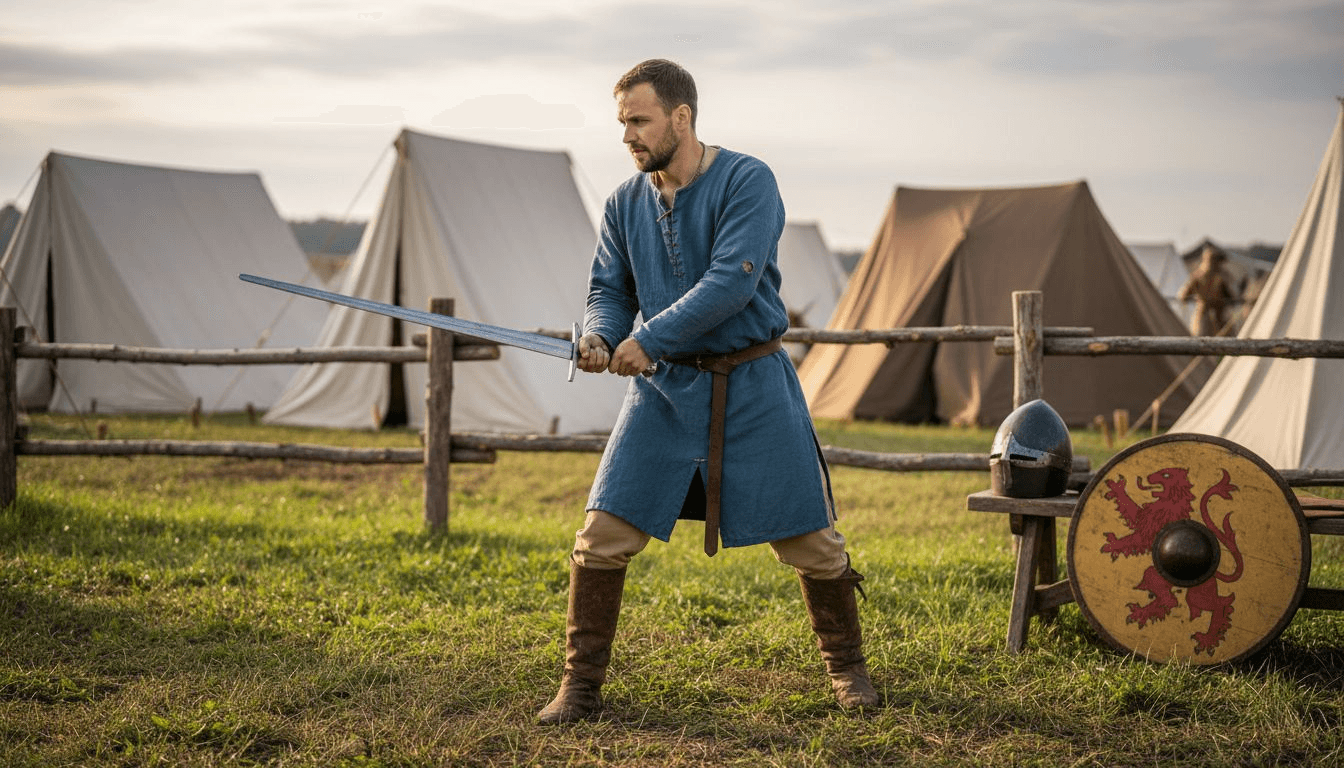
Finding the perfect sword to match your favorite anime or historical character goes beyond picking something that looks impressive. For cosplayers and collectors aiming for genuine accuracy, understanding the historical significance of swords in reenactments is crucial. Swords used in reenactment must reflect real weight, balance, and design, helping you honor the traditions of European, Japanese, and Viking warriors. This article explores how authentic replicas, historical practice, and expert craftsmanship elevate your costume from casual to museum-worthy.
Table of Contents
- Defining Swords In Historical Reenactment
- Varieties Of Reenactment Swords Explained
- Authenticity And Craftsmanship Standards
- Legal, Safety, And Event Guidelines
- Common Pitfalls In Sword Reenactment
Key Takeaways
| Point | Details |
|---|---|
| Authenticity Matters | Reenactment swords should reflect historical designs in weight, balance, and materials to ensure accurate representation. |
| Research Before Purchase | Investigate the specific historical period and combat tradition of the sword type to ensure authenticity and appropriateness for your role. |
| Safety is Paramount | Always adhere to safety protocols, using blunt weapons and protective gear during reenactment events to minimize injury risks. |
| Avoid Common Mistakes | Focus on proper training and understanding of your sword's functionality to avoid pitfalls in performance and authenticity. |
Defining Swords in Historical Reenactment
When you're dressing as your favorite anime character or recreating a historical warrior at a reenactment event, the sword becomes far more than a prop. It's the centerpiece of authenticity, connecting your costume to real combat traditions and warrior culture.
Historical reenactment defines swords as functional replicas or authentic pieces used to demonstrate historical combat practices. Unlike display pieces, these swords must reflect the weight, balance, and design of their historical counterparts to accurately represent how fighters actually moved and fought. This distinction matters whether you're a cosplayer building a historically accurate Vinland Saga look or a serious reenactor studying medieval warfare.
The core purpose of swords in reenactment falls into three categories:
- Historical education: Understanding how warriors actually used these weapons through hands-on practice and demonstration
- Cultural preservation: Keeping martial traditions alive and accessible for future generations
- Performance authenticity: Creating believable, visually accurate representations for audiences and fellow enthusiasts
Researchers studying replica combat techniques have discovered that the damage patterns on historical swords reveal how they were actually used in battle. This experimental approach shows that a sword's weight distribution, edge geometry, and blade thickness directly impact combat effectiveness and warrior technique.
Organizations like the Association for Renaissance Martial Arts focus on authentic swordsmanship through historical fencing arts. They emphasize that understanding sword design isn't just about collecting beautiful replicas—it's about grasping how medieval and Renaissance fighters trained, fought, and survived.
What separates a reenactment sword from a wall-hanging replica? Practical functionality. Whether you're participating in choreographed stage combat or practicing historical techniques, your sword needs to perform realistically.
Key characteristics of reenactment-appropriate swords include:
- Historically accurate blade profile and cross-section
- Proper weight and balance for authentic movement
- Edge design suited to the historical period
- Materials that replicate period originals
- Durability for repeated use and practice
Authenticity in reenactment means your sword should move like a historical weapon, not just look like one on camera.
For cosplayers and collectors, this means researching the specific sword type you're representing. A katana from a samurai anime versus a Viking axe-sword requires completely different construction approaches. The historical period, combat style, and warrior culture all determine what makes a sword "correct" for your reenactment or display.
Pro tip: Before purchasing a replica sword for reenactment, research the specific historical period and combat tradition you're representing—this ensures your sword's design, weight, and balance align with authentic historical evidence rather than Hollywood interpretations.
Varieties of Reenactment Swords Explained
Not all reenactment swords are created equal. Each type serves a distinct purpose, reflects a specific historical period, and demands different handling techniques. Whether you're cosplaying a feudal Japanese warrior or a medieval European knight, knowing which sword variety fits your character matters.
The main categories of reenactment swords break down by historical origin and combat style. Types of historical swords vary dramatically based on geography, era, and the cultures that wielded them. A Viking longsword operates differently than a curved katana, which functions nothing like a Roman gladius.
Here are the primary reenactment sword varieties:
- European longswords: Two-handed blades designed for versatile combat, with balanced weight distribution and crossguards for hand protection
- Katanas and Japanese swords: Curved single-handed blades optimized for slashing with specific sword-drawing techniques
- Viking and Norse swords: Shorter, stockier blades built for brutal cutting power and designed for shield-paired combat
- Curved sabers: Single-handed cavalry swords with distinctive curves, favored by mounted fighters
- Rapiers and fencing swords: Thinner blades emphasizing precision thrusting over slashing, used in dueling traditions
- Broadswords: Shorter, wider blades suited for close combat and battlefield melee
Each variety requires different movement patterns. A longsword demands two-handed control, flowing arm movements, and footwork patterns completely different from katana technique, which emphasizes hip rotation and rapid draw-and-strike movements.
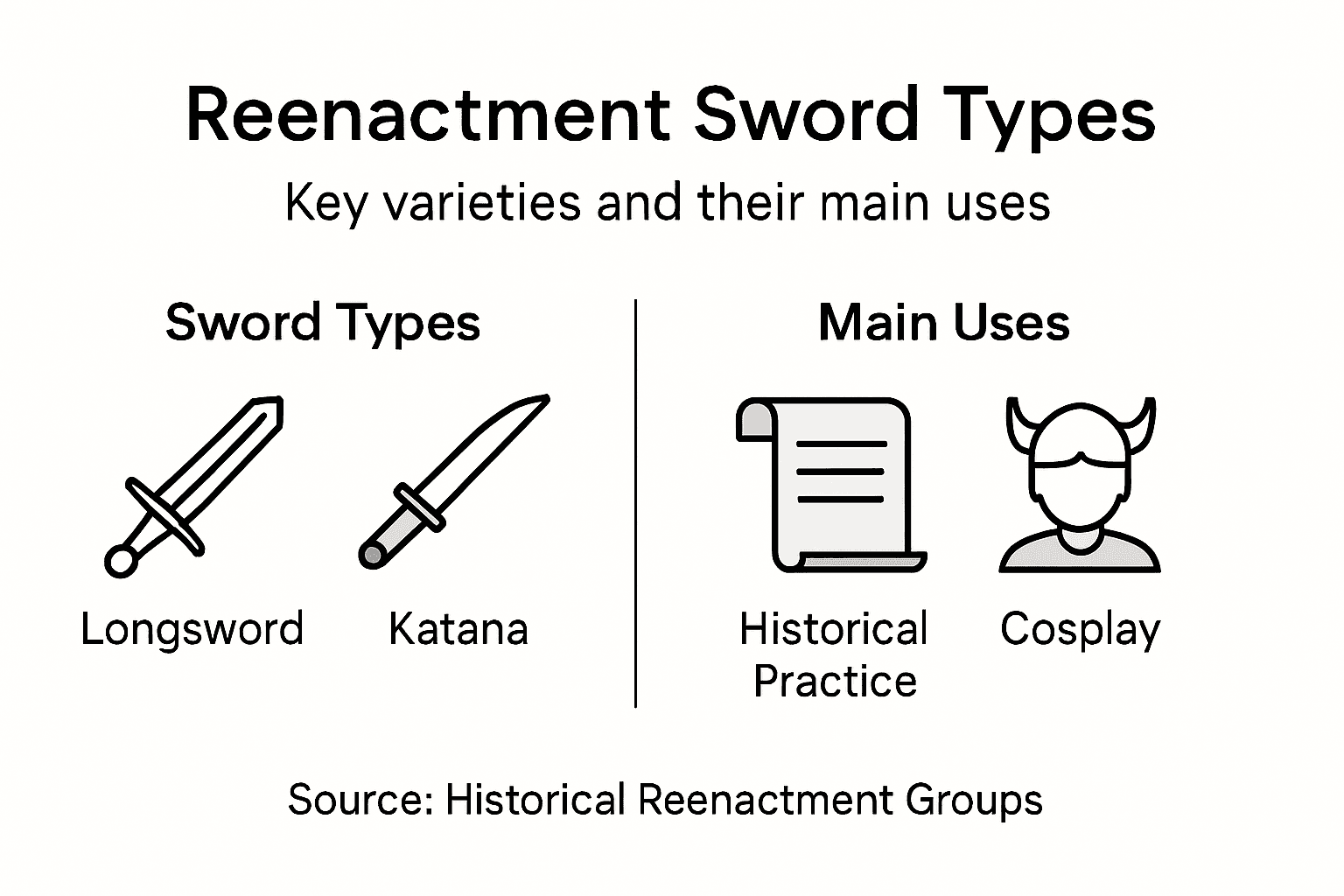
Here's how sword types differ for reenactment purposes:
| Sword Type | Historical Era | Common Use in Reenactment | Unique Handling Characteristic |
|---|---|---|---|
| European Longsword | Medieval Europe | Martial arts training, stage | Two-handed grip, balanced for defense |
| Katana | Feudal Japan | Cosplay, martial arts, stage | Quick draw cuts, curved for slashing |
| Viking Sword | Early Medieval Europe | Historical demos, stage combat | Designed for shield pairing, broad blade |
| Saber | 18th-19th Century | Cavalry reenactment, stage | Single-handed, arched for mounted use |
| Rapier | Renaissance Europe | Dueling demos, fencing | Precision thrusts, slender design |
| Broadsword | Medieval/Renaissance | Battlefield scenarios, cosplay | Wide blade for close combat |
Material composition also varies by sword type and reenactment purpose. Some reenactors prefer steel replicas for authenticity and weight accuracy, while others use blunted or practice versions designed for safe choreographed combat without sharp edges.
The sword you choose must match both your character's historical context and your intended reenactment activity—display, stage combat, or historical martial arts training.
Cosplayers building anime-inspired characters often face unique challenges. A character wielding a fantasy oversized sword requires different proportions than historical swords. Understanding the difference between authentic historical varieties and fantasy interpretations helps you make informed choices about accuracy versus artistic expression.
For stage combat and choreographed reenactments, consider practice-grade swords with dulled edges. These provide authentic weight and balance while prioritizing safety for performers and audiences.
Pro tip: Match your sword variety to your specific reenactment activity—use authentic replicas for historical martial arts training, practice-grade versions for choreographed stage combat, and display-quality replicas for cosplay photography and conventions.
Authenticity and Craftsmanship Standards
A reenactment sword's value—whether for display, cosplay, or historical practice—hinges on how closely it matches historical reality. Authenticity and craftsmanship work together. One without the other falls flat.
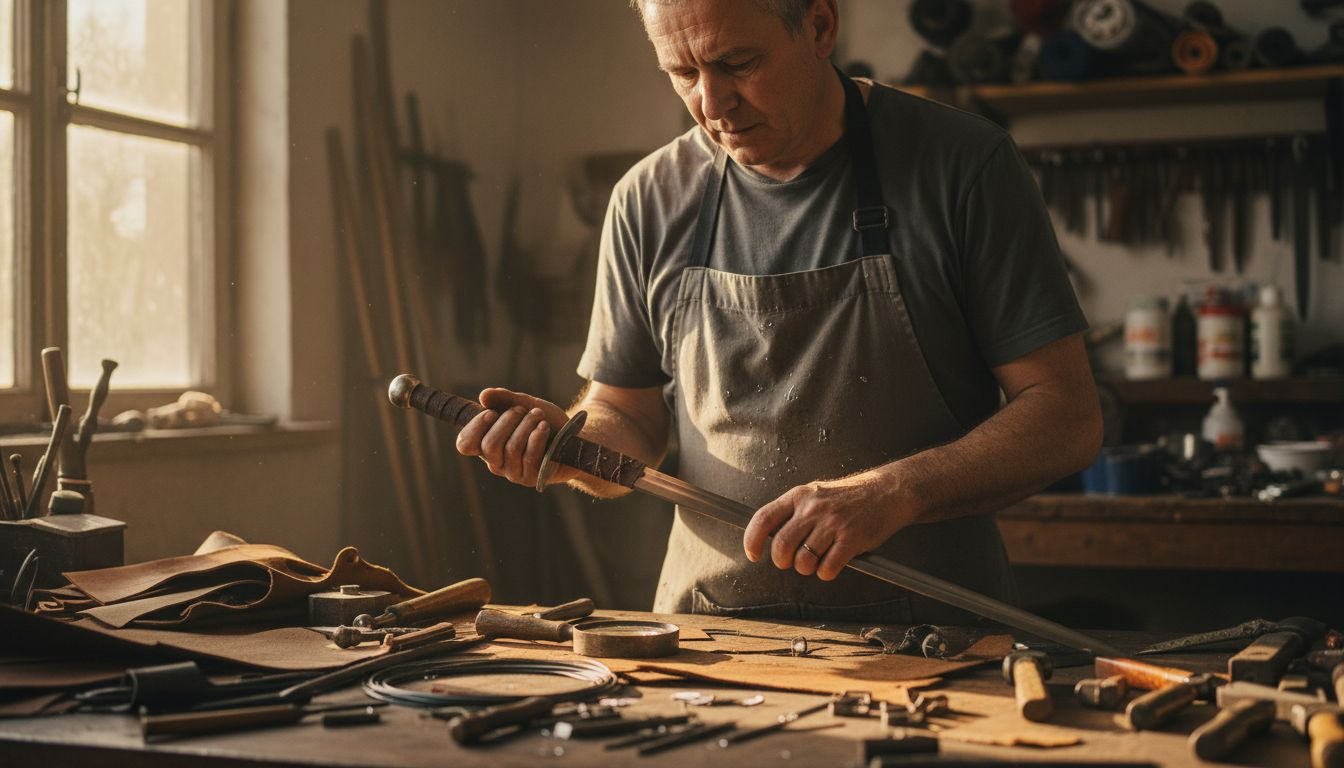
Authenticity means your sword reflects the actual design, weight, proportions, and construction methods of a historical blade. It's not about making something look pretty on camera. It's about creating something that moves, feels, and performs like the original.
Craftsmanship determines whether a sword achieves that authenticity. The quality of materials, precision of construction, and attention to historical detail separate museum-worthy replicas from costume props.
Key standards for reenactment sword authenticity include:
- Blade geometry: Correct cross-section, edge profile, and point design matching the historical period
- Weight distribution: Proper balance point ensuring authentic movement and handling
- Material composition: Steel types and hardening methods reflecting historical techniques
- Handle construction: Accurate grip shape, guard design, and pommel configuration
- Proportions: Blade length, width, and thickness matching documented historical examples
- Surface finish: Patina, discoloration, and wear patterns reflecting authentic aging
Sword craftsmanship quality directly impacts a replica's accuracy and functionality. Poor craftsmanship means unbalanced weight, incorrect blade profiles, and materials that don't perform authentically.
For cosplayers building anime or fantasy characters, this matters differently. A historically accurate katana requires different standards than an oversized fantasy sword inspired by anime design. Choose which authenticity matters for your specific project.
True craftsmanship means every detail serves historical accuracy, not just visual appeal.
Hand-forging represents the highest craftsmanship standard, mimicking historical production methods. Machine-made replicas can still achieve authenticity through precision manufacturing, though they won't carry the same artisanal quality.
Inspect these elements before purchasing:
- Check blade balance by holding the sword at the crossguard—it should feel stable, not tip-heavy
- Run your fingers along the edge to verify sharpness level matches intended use
- Examine handle construction for secure assembly and authentic materials
- Verify weight against documented historical specs for that sword type
- Look for manufacturing marks indicating hand-forging versus machine production
Authenticity standards vary by reenactment context. Stage combat prioritizes safety over historical perfection, justifying practice-grade construction. Historical martial arts training demands authentic replicas matching original specifications exactly.
This table helps summarize craftsmanship standards for sword selection:
| Standard | Importance | How to Evaluate |
|---|---|---|
| Blade Geometry | Ensures historical accuracy | Check cross-section shape |
| Weight Distribution | Impacts realism and handling | Hold for balance feel |
| Material Quality | Affects durability and authenticity | Inspect steel and method |
| Handle Design | Supports proper grip and combat use | Review shape and assembly |
| Surface Finish | Indicates aging and historical detail | Look for patina or marks |
Pro tip: Before purchasing a reenactment sword, research the specific historical period and compare the replica's weight, balance point, and blade geometry against documented historical examples from museum collections and archaeological records.
Legal, Safety, and Event Guidelines
Bringing a sword to a reenactment event means understanding the legal framework and safety protocols governing your participation. These aren't just bureaucratic hurdles—they protect you, fellow participants, and audiences.
Legal considerations vary significantly by location and event type. Some regions restrict blade length, edge sharpness, or materials. Others require liability waivers, insurance, or permits for public events. Always contact your local event organizers before purchasing or transporting any reenactment sword.
Safety protocols are non-negotiable in organized reenactments. Safety at reenactment battles requires blunt or certified weapons, protective gear, controlled combat techniques, and clear rules of engagement. These measures minimize injury risk while maintaining historical authenticity.
Key safety requirements at most reenactment events include:
- Blunt or practice-grade weapons with dulled edges for choreographed combat
- Protective equipment: Helmets, padding, and body armor for participants
- Training and certification: Proof of combat training before participation
- Medical staff: On-site medical professionals monitoring participant health
- Clear combat zones: Designated areas separated from audiences and spectators
- Rules of engagement: Defined combat stopping points and injury protocols
For cosplayers attending conventions or fantasy events, sword policies differ dramatically from historical reenactments. Many conventions prohibit real metal entirely, requiring foam, wood, or non-functional replicas. Check event policies before arriving with your sword.
Safety protocols exist because real swords, even blunt ones, cause real injuries when mishandled.
Transporting your sword legally matters too. Many regions classify swords as weapons, restricting transport in vehicles or public spaces. Research local laws regarding blade possession, transportation, and public display before moving your equipment.
Insurance and liability protection are essential if you participate in organized reenactments. Many events require participants to carry personal liability insurance or sign waivers acknowledging injury risks. Some groups provide coverage for registered members.
Before participating in any reenactment event, verify these requirements:
- Check local laws regarding sword possession and transport
- Review event-specific weapon policies and safety standards
- Obtain required training certificates or combat experience documentation
- Arrange appropriate insurance coverage if needed
- Understand liability waivers and what you're agreeing to
- Confirm protective gear requirements for your role
Communicate openly with event organizers about your sword. Provide specifications—blade length, weight, material composition—so organizers can approve it for participation. Hidden weapons or unapproved equipment get you expelled and potentially facing legal consequences.
Pro tip: Contact your reenactment event organizers at least 4-6 weeks before the event to confirm sword specifications, required safety equipment, and any local legal restrictions—this prevents last-minute equipment changes or disqualification.
Common Pitfalls in Sword Reenactment
Even experienced cosplayers and reenactors stumble into avoidable mistakes. These pitfalls compromise authenticity, safety, or both. Knowing what to avoid separates serious participants from casual enthusiasts.
The biggest mistake? Prioritizing Hollywood coolness over historical accuracy or safety. Movies and anime show swords doing impossible things—instant kills, throwing attacks, one-handed broadsword wielding. Real historical sword combat looked completely different.
Balancing historical authenticity with safety requires understanding that modern reenactment modifies lethal techniques intentionally. Choreographing fights, using blunted weapons, and wearing protective gear keeps participants alive. Misinterpreting historical sources to justify unsafe or inauthentic practices undermines both goals.
Common technical mistakes include:
- Incorrect grip pressure: Holding the sword too tightly restricts movement and causes fatigue
- Poor footwork: Standing flat-footed or crossing feet kills balance and combat effectiveness
- Overdramatic swings: Large, slow movements look impressive on screen but waste energy
- Wrong blade angle: Holding the blade at improper angles reduces cutting effectiveness
- Neglecting guard position: Leaving your body undefended invites counterattacks
Another frequent error: buying a sword without understanding your specific reenactment role. A LARP sword needs different specifications than a historical martial arts training blade or a display piece. Choosing the right LARP sword depends on your character type, fighting style, and event rules.
Reenactment authenticity dies when you prioritize looking cool over historical evidence.
Misrepresenting lethality causes credibility problems too. Historical swords required skill to use effectively. A trained warrior needed multiple strikes to incapacitate an opponent, not one magical instant-kill blow. Anime and fantasy fiction distort this reality dramatically.
Equipment mistakes harm both performance and authenticity. Using the wrong sword type for your historical period looks obviously wrong to knowledgeable participants. A katana-wielding "medieval knight" or a longsword-carrying "Viking warrior" breaks immersion instantly.
Skip these common pitfalls:
- Purchasing before researching your specific character's historical sword type
- Neglecting footwork training and assuming sword skill comes from arm strength alone
- Using sharp blades for reenactment events requiring blunt weapons
- Ignoring historical source material in favor of fictional interpretations
- Training alone without feedback from experienced historical martial artists
- Wearing costumes that don't match your sword's historical period
Cosplayers face unique pitfalls too. Prioritizing costume photography over functional equipment means your sword won't handle realistically. An oversized fantasy sword might photograph beautifully but performs terribly in any active reenactment.
Pro tip: Study historical documentation and training footage before your first reenactment event—this prevents embarrassing mistakes and ensures your sword techniques look authentic rather than borrowed from anime or movies.
Elevate Your Historical Reenactment with Authentic Replica Swords
Authenticity and safety are critical when selecting the perfect sword for your reenactment events or cosplay. The article highlights the importance of finding swords with accurate weight, balance, and craftsmanship that truly reflect historical designs rather than just looking good on camera. Many enthusiasts struggle with finding swords that meet these standards while also being suitable for practice, performance, or display.
At Propswords, we understand these challenges and offer a wide selection of high-quality replica swords that cater to serious reenactors, collectors, and cosplayers alike. Our collection includes swords inspired by Viking, medieval, and anime cultures that balance authenticity with durability. Whether you need a steel replica for martial arts training or a practice-grade sword for safe stage combat, our products prioritize historical accuracy and functional design.
Discover the ideal sword to match your specific reenactment role or cosplay character at Propswords. With free shipping within the USA and special discounts, now is the perfect time to invest in a replica sword that truly performs and feels like the real thing. Browse our selection today and bring your reenactment experience to the next level by choosing a sword crafted with both passion and precision. Start your journey by exploring our collection at Propswords and ensure your next event is both authentic and safe.
Frequently Asked Questions
What defines a sword used in historical reenactment events?
A sword in historical reenactment is a functional replica or an authentic piece that reflects the design, weight, and balance of its historical counterpart, used to demonstrate combat practices and promote authenticity in performances.
What are the key characteristics of a reenactment sword?
Reenactment swords should have historically accurate blade profiles, proper weight and balance for authentic movement, edge designs suited to the historical period, durable materials, and features that replicate period originals.
How do different types of swords affect handling in historical reenactments?
Each sword type has unique handling characteristics influenced by its design and historical usage. For instance, European longswords require two-handed control and different footwork compared to katanas, which emphasize quick draw-and-strike techniques.
What should I consider when choosing a sword for reenactment?
When choosing a sword for reenactment, consider the specific historical period and combat tradition you're representing. Ensure the design, weight, and balance align with authentic historical evidence rather than cinematic interpretations.