
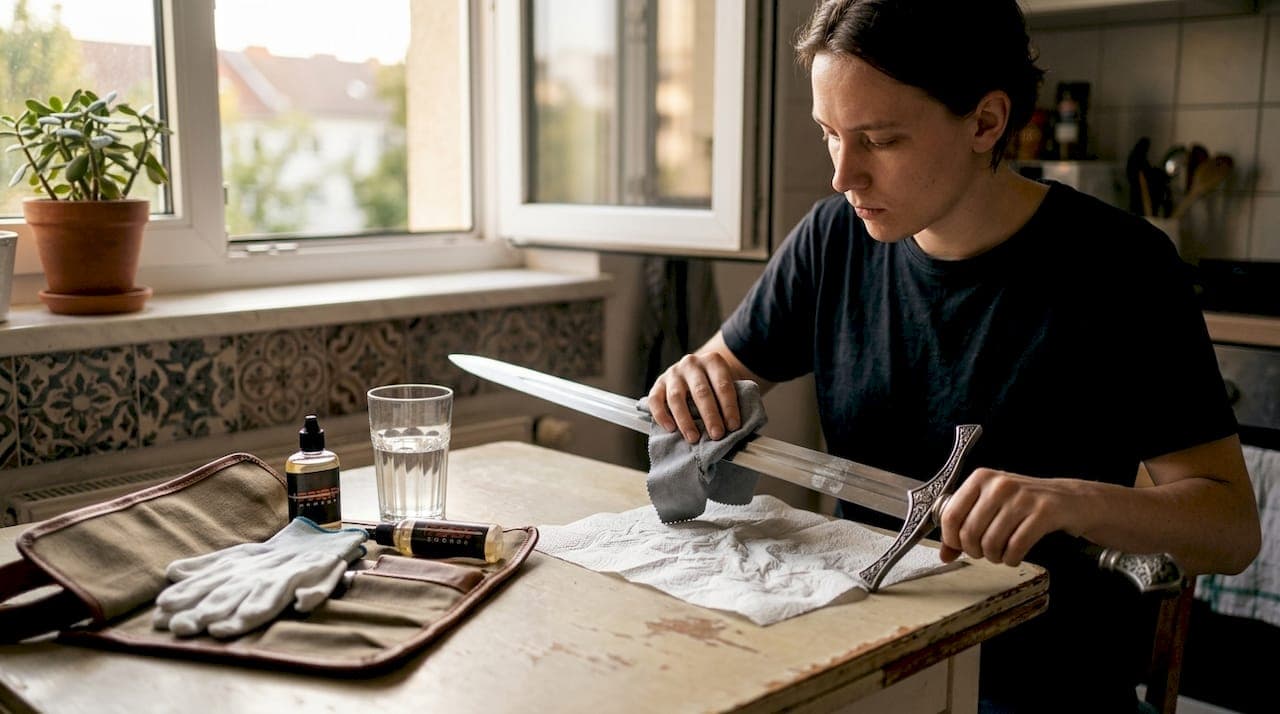
You've invested in a stunning replica sword, displayed it proudly on your wall, and then one day you notice it: a faint rust spot, stubborn fingerprints, or a dull finish that wasn't there before. It's frustrating to watch your prized piece lose its luster, especially when you've put so much care into building your collection. The good news is that with the right preparation and techniques, anyone can extend the life and beauty of their swords. This guide walks you through the essentials, from understanding your sword's material to executing a safe cleaning process, maintaining ideal display conditions, and troubleshooting common mistakes.
Table of Contents
- Know your sword: types and materials
- Essential tools and supplies for sword care
- How to clean your sword: step-by-step instructions
- Maintaining your sword: ongoing care and display environment
- Troubleshooting and common sword care mistakes
- Elevate your collection with Propswords
- Frequently asked questions
Key Takeaways
| Point | Details |
|---|---|
| Identify material first | Understanding sword materials is essential for choosing the right care routine. |
| Use proper cleaning supplies | The right tools prevent scratches and prolong your sword’s display quality. |
| Control your display environment | Limiting humidity and sun exposure protects swords from rust and fading. |
| Clean consistently | Routine cleaning removes dust, fingerprints, and prevents long-term damage. |
| Avoid common mistakes | Recognizing common care errors saves time and your sword’s appearance. |
Know your sword: types and materials
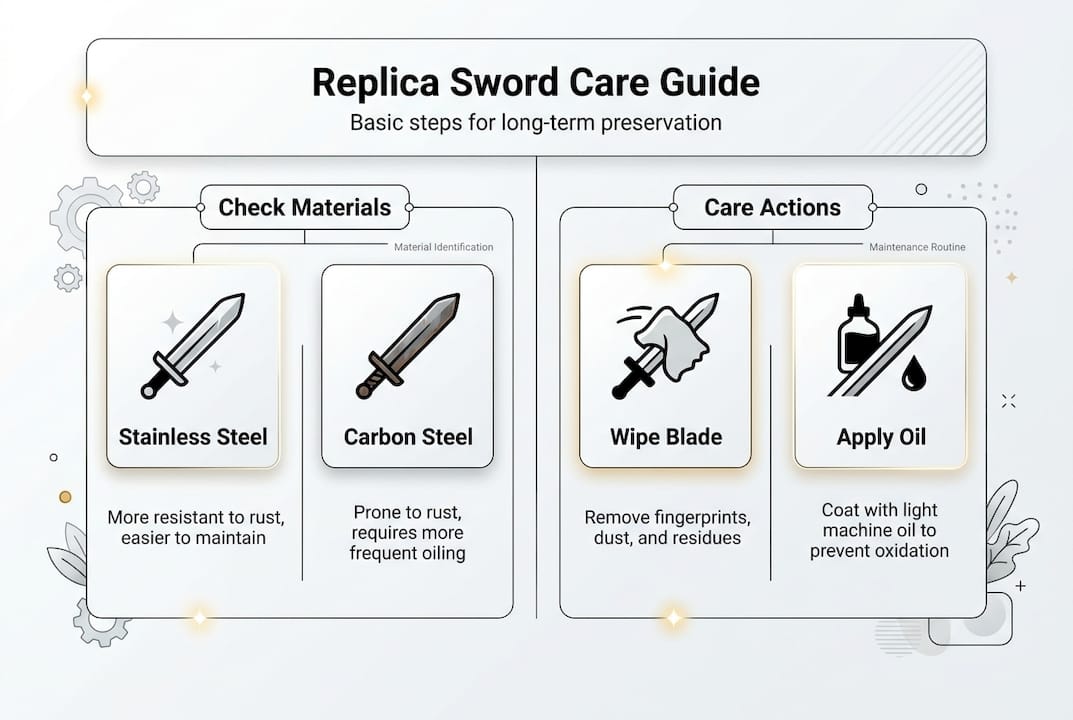
Before you grab a cloth and start wiping down your blade, you need to identify what you're working with. Not all swords are created equal, and sword materials determine cleaning methods and risk of damage. Stainless steel replicas resist rust and are forgiving for beginners, while carbon steel swords deliver authenticity but demand more attention to prevent corrosion. Display swords made from zinc or aluminum alloys are lightweight and affordable, yet they scratch easily and can't handle aggressive polishing. Wood components, like hilts or scabbards, require entirely different care to avoid drying or cracking.
Knowing your material is the first critical step before cleaning. Stainless steel tolerates moisture and mild cleaners, but carbon steel will rust if exposed to water or high humidity. Zinc alloy blades look impressive but are purely decorative and can't withstand the same handling as metal counterparts. If you're unsure, check the sword material guide or consult the manufacturer's specs. Understanding these distinctions helps you avoid accidental damage and choose the right products for each piece in your collection.
Here's a quick comparison to guide your approach:
| Material | Primary Risk | Care Focus |
|---|---|---|
| Stainless Steel | Scratches, fingerprints | Regular dusting, gentle polish |
| Carbon Steel | Rust, corrosion | Oil coating, low humidity |
| Zinc/Aluminum Alloy | Scratches, dents | Minimal handling, soft cloths |
| Wood (hilts, scabbards) | Drying, cracking | Conditioning oil, avoid moisture |
Pro Tip: If your sword has mixed materials (metal blade, wood hilt), treat each component separately to avoid cross-contamination of cleaners or oils.
Once you've identified your sword's material, you can move forward with confidence. Different materials have different vulnerabilities, and recognizing those differences now saves you from costly mistakes later. For more details on how display sword differences impact care routines, explore the linked resource.
Essential tools and supplies for sword care
Now that you know the material and risks, make sure you have the right tools for the job before handling your sword. Gathering the correct supplies upfront saves time and prevents accidental damage. The right supplies prevent accidental scratching or chemical damage, so don't skip this step.
Here's what you need:
| Supply | Purpose |
|---|---|
| Microfiber cloths | Dust and polish without scratching |
| Non-abrasive polish | Restore shine on stainless steel |
| Sword oil | Protect carbon steel from rust |
| Cotton gloves | Prevent fingerprints during handling |
| Small brushes | Clean intricate hilts and guards |
| Compressed air | Remove dust from tight spaces |
| Acid-free wax | Optional protective coating for display pieces |
Must-have items and why they matter:
- Microfiber cloths trap dust particles instead of pushing them around, reducing the risk of micro-scratches.
- Sword oil creates a barrier against moisture, essential for carbon steel blades that rust quickly.
- Cotton gloves eliminate direct skin contact, which leaves oils and acids that cause tarnish over time.
- Non-abrasive polish restores luster without removing metal, unlike harsh compounds that can wear down finishes.
- Small brushes reach crevices in ornate guards or pommels where dust accumulates.
Pro Tip: Avoid using household glass cleaner, rough rags, or water on carbon steel. Glass cleaners contain ammonia that can corrode metal, and water accelerates rust formation. Stick to products designed for sword care or use mineral oil as a safe alternative.
If you're building a collection, consider investing in a dedicated sword care kit. Many display sword buying tips emphasize the importance of maintenance supplies from day one. Having everything ready means you can clean your swords on a regular schedule without scrambling for materials.
How to clean your sword: step-by-step instructions
With all supplies ready, you can start the proper cleaning routine. Here's how to do it safely and effectively, whether you're refreshing a stainless steel anime replica or maintaining a carbon steel medieval piece.
- Put on cotton gloves. This prevents fingerprints and protects the blade from skin oils.
- Dust the blade with a dry microfiber cloth. Wipe from hilt to tip in smooth, even strokes. Remove loose particles before applying any liquid.
- Inspect for stains or residue. Look for fingerprints, water spots, or tarnish. Identify problem areas before moving to the next step.
- Apply a small amount of non-abrasive polish to a clean cloth. For stainless steel, use a metal polish designed for swords. For carbon steel, skip polish and move directly to oiling.
- Buff the blade in circular motions. Work in small sections, applying light pressure. Avoid scrubbing aggressively, which can scratch the finish.
- Wipe away excess polish with a fresh microfiber cloth. Make sure no residue remains, as it can attract dust or cause streaking.
- Apply a thin layer of sword oil to carbon steel blades. Use a cloth to spread the oil evenly, covering the entire surface. This step is critical for rust prevention.
- Clean the hilt, guard, and pommel with a small brush. Remove dust from intricate details, then wipe with a damp (not wet) cloth if needed.
- Dry all components thoroughly. Moisture is the enemy of metal, so ensure everything is completely dry before returning the sword to its display.
- Inspect your work in good lighting. Check for missed spots, streaks, or areas that need additional attention.
Always wear cotton gloves when cleaning or handling, especially after polishing. Even freshly cleaned hands leave oils that can tarnish metal over time.
Pro Tip: Clean in a well-lit area to spot missed areas or residue. Natural light reveals imperfections that artificial lighting might hide, ensuring a flawless finish.
Fingerprints can lead to persistent stains, so gloves are non-negotiable. If you're working with a particularly delicate or valuable piece, consider laying down a soft towel to protect the blade if you need to set it down mid-process. For more guidance on safe handling and presentation, check out replica sword display tips.
Maintaining your sword: ongoing care and display environment
After cleaning, ongoing care and strategic display choices are essential to preserve your sword's finish and value. Even the most thorough cleaning won't matter if your sword sits in a humid room or gets handled without gloves every week. Preventative measures and environmental controls make the difference between a collection that lasts decades and one that deteriorates within a few years.
Key maintenance practices:
- Limit handling frequency. The less you touch your sword, the less you risk transferring oils or causing accidental damage. If you must handle it, always wear cotton gloves.
- Monitor room temperature and humidity. Aim for 40-50% humidity and stable temperatures between 60-75°F. Fluctuations cause condensation, which accelerates rust.
- Keep swords away from direct sunlight. UV rays fade colors, warp wood components, and degrade protective coatings over time.
- Establish a periodic oiling schedule. Carbon steel swords need a fresh oil coat every 3-6 months, depending on your climate. Stainless steel requires less frequent attention but still benefits from occasional polishing.
- Use display stands or cases for protection. Wall mounts are popular, but enclosed cases offer superior protection from dust, humidity, and accidental contact.
Humidity above 55% increases rust risk dramatically for carbon steel. If you live in a humid climate, consider using a dehumidifier in your display room or storing swords in climate-controlled cases. Even stainless steel can develop water spots or corrosion in extreme conditions, so don't assume any material is completely immune.

For collectors with multiple pieces, rotating your display helps distribute handling and exposure evenly. This approach also keeps your collection fresh and interesting for visitors. Explore sword display environment tips for more strategies on creating the ideal showcase space. Additionally, safe sword display practices cover mounting techniques that minimize stress on the blade and reduce the risk of accidental falls.
Troubleshooting and common sword care mistakes
Even careful collectors can slip up. Here's how to avoid pitfalls and deal with minor oops moments. Recognizing mistakes early and knowing how to correct them prevents small issues from becoming permanent damage.
Common mistakes and how to fix them:
| Mistake | Risk | Fix/Prevention |
|---|---|---|
| Using water to clean carbon steel | Immediate rust formation | Use oil-based cleaners only; dry thoroughly if water contact occurs |
| Applying too much polish | Residue buildup, streaking | Buff with a clean cloth; use less product next time |
| Storing swords in damp basements | Corrosion, mold on wood | Move to climate-controlled space; use dehumidifier |
| Handling without gloves | Fingerprints, tarnish | Always wear cotton gloves; clean immediately if touched |
| Ignoring loose parts | Structural damage, safety hazard | Tighten screws; consult professional for major repairs |
Poor handling or wrong cleaners can do permanent damage to replicas, so it's worth taking the time to do things right. If you notice a mistake, address it immediately rather than waiting for your next scheduled cleaning.
Quick fixes for common issues:
- Small scratches on stainless steel: Use a metal polish and buff gently in the direction of the grain. Deep scratches may require professional refinishing.
- Minor rust spots on carbon steel: Apply a rust remover designed for swords, then re-oil the blade. Catch rust early before it pits the metal.
- Loose hilt or pommel: Tighten screws carefully with the appropriate tool. If parts are stripped or damaged, consult a professional rather than forcing them.
- Dull finish after cleaning: You may have used too much polish or the wrong product. Wipe the blade clean and start over with a fresh cloth and minimal product.
For a comprehensive approach to avoiding these pitfalls, refer to the checklist for sword care. This resource covers everything from initial inspection to long-term storage, ensuring you don't overlook critical steps.
Replace damaged display mounts immediately. A failing mount can cause your sword to fall, resulting in bent blades, broken hilts, or even injury. Inspect mounts regularly and upgrade to sturdier options if you notice any instability. When in doubt, consult professionals for major repairs or restoration work. Attempting complex fixes without experience can make problems worse and reduce the value of your collection.
Elevate your collection with Propswords
You've learned how to clean, maintain, and troubleshoot your replica swords, but the right care starts with the right sword. At Propswords, we specialize in high-quality replicas inspired by anime, movies, and historical weaponry, designed for collectors who demand authenticity and craftsmanship. Whether you're adding to an existing collection or starting fresh, our selection offers pieces that are built to last and easy to maintain with the techniques you've just mastered.

Our swords come with detailed care instructions and are crafted from materials that respond well to proper maintenance routines. From stainless steel display pieces to carbon steel replicas that demand a bit more attention, we provide options for every skill level and budget. Explore our catalog to find swords that match your aesthetic, and rest easy knowing you have the knowledge to keep them looking pristine for years to come. Visit Propswords today and discover why collectors trust us for their most prized displays.
Frequently asked questions
How often should I clean my replica sword?
Most replica swords need dusting monthly and a full clean every 3-6 months to prevent buildup. Regular maintenance reduces rust risk and keeps your collection looking sharp.
Can I use regular household cleaners on my sword?
Avoid household cleaners; they can scratch or corrode sword materials, especially carbon steel. Improper cleaners cause permanent damage to finishes, so stick to products designed for metal care.
What's the best way to prevent rust on carbon steel swords?
Keep humidity below 55%, apply a thin layer of sword oil, and avoid direct contact with bare hands. High humidity increases rust risk significantly for carbon steel.
Is it safe to display swords near windows or heat sources?
No, sunlight and heat can fade or warp sword components over time. Environmental factors impact longevity, so choose a stable, shaded location for your display.