
TL;DR:
- Proper cleaning and environmental control are essential to preserve replica swords.
- Use specific supplies and techniques to prevent rust, tarnish, and material damage.
- Regular inspections and climate management extend the collection's longevity.
You pull your prized Demon Slayer replica off the wall and notice a faint orange tinge creeping along the blade. That sinking feeling is something every serious collector knows. Even the highest-quality replica swords are vulnerable to rust, tarnish, and material breakdown when left without proper care. The good news is that a consistent maintenance routine prevents most of these problems entirely. This guide walks you through the exact supplies you need, a step-by-step cleaning process, how to troubleshoot early damage, and the long-term storage habits that keep your collection looking display-ready for years.
Table of Contents
- What you need for proper replica sword maintenance
- Step-by-step replica sword cleaning and preservation
- Troubleshooting damage and avoiding common mistakes
- Long-term storage and climate control best practices
- Our take: What most sword enthusiasts overlook in maintenance
- Enhance your collection with expert resources
- Frequently asked questions
Key Takeaways
| Point | Details |
|---|---|
| Handle with care | Wearing gloves prevents fingerprints and long-term corrosion on replica swords. |
| Clean smart, not hard | Use the correct cleaning sequence and keep oil application minimal to avoid attracting dust. |
| Control your climate | Keep storage humidity below 55% and monitor conditions monthly to reduce rust risk. |
| Know your limits | Seek professional help for major rust or restoration to protect valuable replicas. |
What you need for proper replica sword maintenance
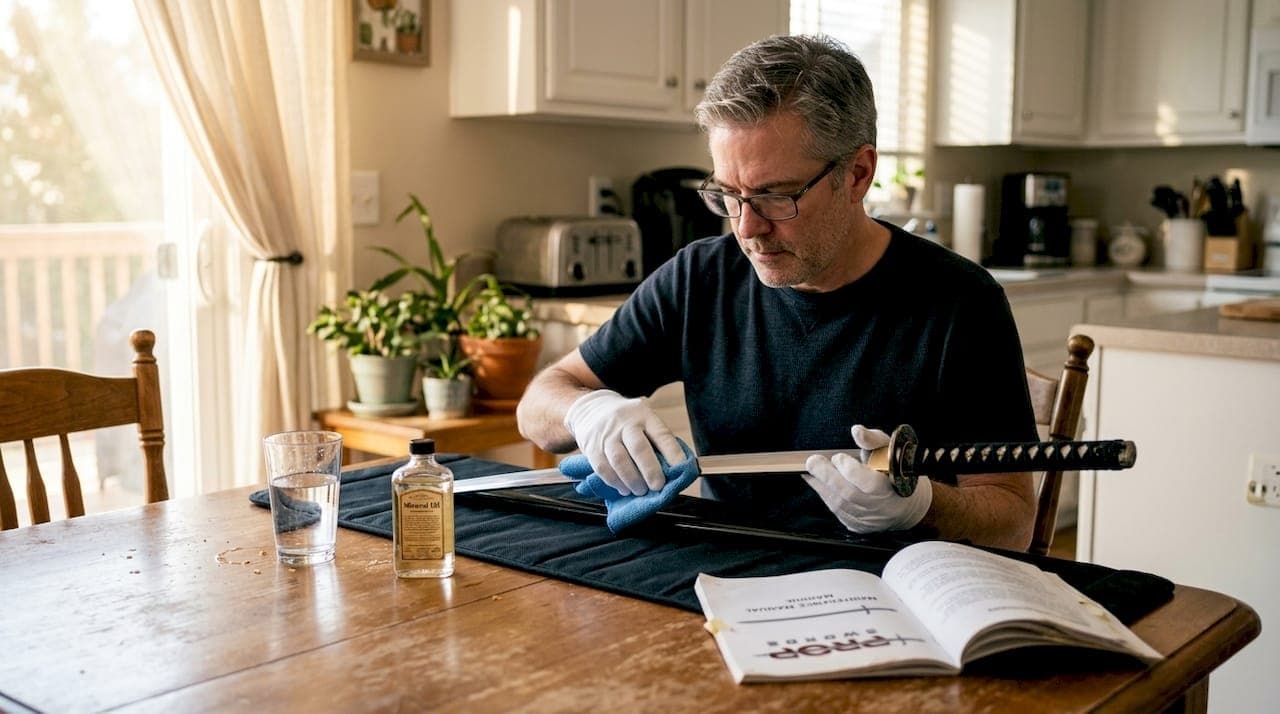
Before you touch any blade, having the right materials on hand makes the difference between a safe cleaning session and an accidental scratch or chemical reaction. Think of it like a surgeon prepping a tray before an operation. Every tool has a purpose, and improvising with the wrong one causes more harm than good.
Here is what you need to gather:
- Cotton gloves (non-negotiable for metal blades)
- Soft microfiber cloths (at least two: one for cleaning, one for buffing)
- Mineral oil or camellia oil for metal blades
- Mild dish soap diluted in water for non-metal replicas
- Silica gel packets for storage areas
- A display case or sword wall mount with UV protection
- Isopropyl alcohol (70%) for light surface disinfection on handles
- Soft-bristle brush for guard and handle detail work
For collectors with restoration needs, you may also want fine-grit polishing cloth (not sandpaper) and a rust eraser for minor surface spots.
Understanding your sword's construction matters here. Different replica sword materials react differently to cleaning agents, so always confirm what your blade is made of before applying anything. If you are unsure whether your piece is authentic high-carbon steel or a decorative stainless version, reviewing a guide on authenticating replica swords first will save you from costly mistakes.
| Supply | Purpose | Priority |
|---|---|---|
| Cotton gloves | Prevent skin oil corrosion | Essential |
| Microfiber cloth | Safe surface wiping | Essential |
| Camellia or mineral oil | Blade protection | Essential |
| Silica gel | Humidity control in storage | Recommended |
| Rust eraser | Light surface rust removal | Optional |
| Polishing cloth | Restoring shine | Optional |
As the Sword Care Guide explains, always wear cotton gloves when handling to avoid fingerprints and skin oils which cause corrosion. This is especially true for high-carbon steel blades, which oxidize faster than stainless.
Pro Tip: Set up a dedicated cleaning area on a padded table, away from pets, kids, and anything that could knock the blade. A dropped sword can chip an edge or damage a custom finish in an instant.
Step-by-step replica sword cleaning and preservation
With your supplies ready and your workspace clear, you can move through the actual cleaning process with confidence. This routine works for both beginners and experienced collectors. Consistency is what matters most here, not complexity.
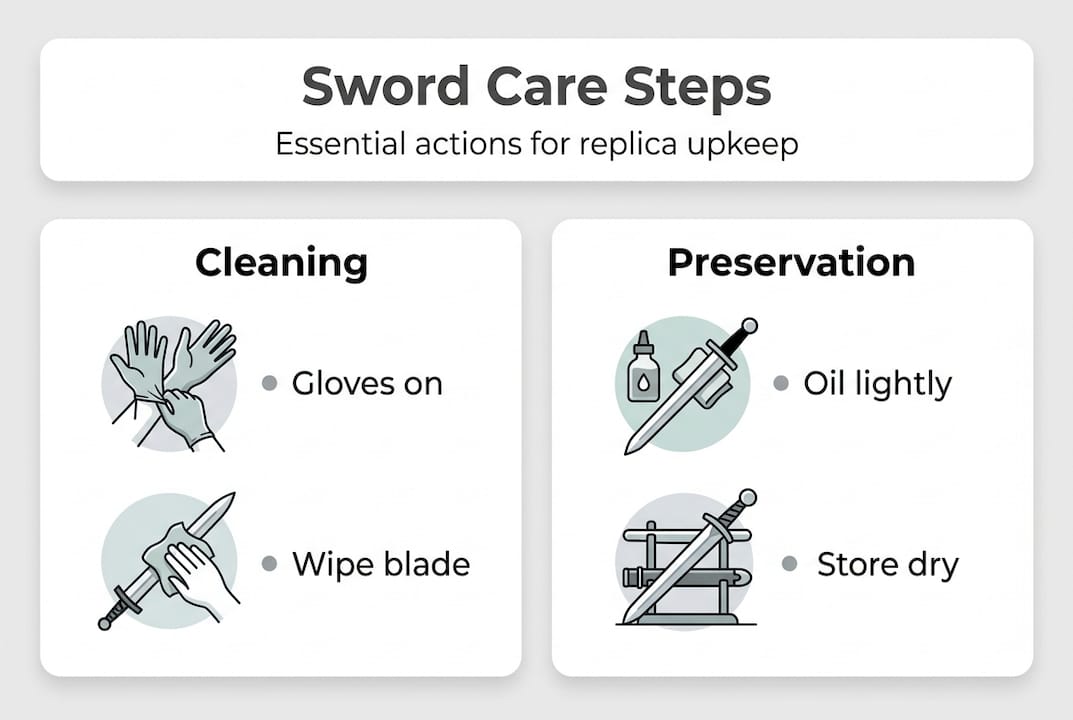
- Put on your cotton gloves before picking up the sword. Do this every single time, no exceptions.
- Dust the blade lightly with a dry microfiber cloth, moving from the base toward the tip in long, even strokes. Never wipe across the edge.
- Apply your cleaning agent. For metal blades, add a few drops of mineral or camellia oil to a clean cloth. For foam or plastic replicas, use a barely damp cloth with diluted mild soap.
- Wipe the blade surface in the same base-to-tip direction. Use gentle, even pressure. Do not scrub.
- Dry thoroughly with a second clean cloth. Moisture left on metal is the fastest path to rust.
- Apply a thin protective oil layer to metal blades only. Less is more. A light film is all you need.
- Store the sword in a low-humidity environment, ideally below 55%, before returning it to its mount or case.
For cosplay and anime replicas, lightweight materials like stainless or foam are ideal for events, and metal versions follow the same metal care routine above. If you are shopping for your next piece, checking out best anime sword replicas or browsing top cosplay swords gives you a head start on choosing pieces that are easier to maintain.
Stat to know: Keeping humidity below 55% dramatically reduces rust risk on metal replica blades.
Pro Tip: Clean your sword at least once a month and always after returning from a convention or cosplay event. Sweat, dust, and handling during events accelerate material breakdown faster than you might expect. Following a pro sword maintenance schedule keeps your collection in peak condition year-round.
Troubleshooting damage and avoiding common mistakes
Even with a solid routine, damage can still happen. The key is catching problems early, before a small spot of surface rust becomes deep pitting or a light scratch becomes a visible gouge. Knowing what to look for saves you from expensive repairs or permanent loss of a piece you love.
Here is what to watch for during each inspection:
- Orange or brown spots on the blade surface (early-stage rust)
- Dull gray patches that do not buff away (pitting or oxidation)
- White or greenish film on brass or copper fittings (tarnish)
- Loose or shifting handles (a structural issue, not just cosmetic)
- Hairline scratches near the edge from improper wiping technique
Not every problem needs a professional, but some definitely do. Here is a quick breakdown:
| Issue | DIY fix | Seek a professional |
|---|---|---|
| Light surface dust | Microfiber wipe | No |
| Minor surface rust | Rust eraser, light oil | Only if pitting is deep |
| Tarnished fittings | Brass polish, soft cloth | No |
| Deep pitting or corrosion | Not recommended | Yes |
| Blade warping | Not recommended | Yes |
| Loose handle rivets | Minor tightening possible | If structural damage present |
Before buying any replica, reviewing an anime sword checklist helps you understand what quality benchmarks to expect, which also tells you how much restoration a piece might need over time.
"Over-oiling attracts dust. Use a thin film only. For valuable replicas, consult professionals for deep rust or polishing."
One of the most common mistakes collectors make is over-cleaning. Scrubbing too hard, using abrasive materials, or applying too much oil all cause damage. Restraint is a skill in this hobby. When in doubt, do less.
Long-term storage and climate control best practices
Cleaning is only half the equation. Where and how you store your replica swords determines whether your maintenance work lasts weeks or years. Most damage to stored collections comes from environmental factors that are completely preventable with a little planning.
Here are the core storage rules every collector should follow:
- Keep swords away from windows. UV light fades finishes, dries out wood handles, and weakens leather wrapping over time.
- Avoid heat sources. Radiators, vents, and fireplaces create temperature swings that expand and contract materials, loosening fittings.
- Use silica gel packets in display cases and storage bags to absorb excess moisture.
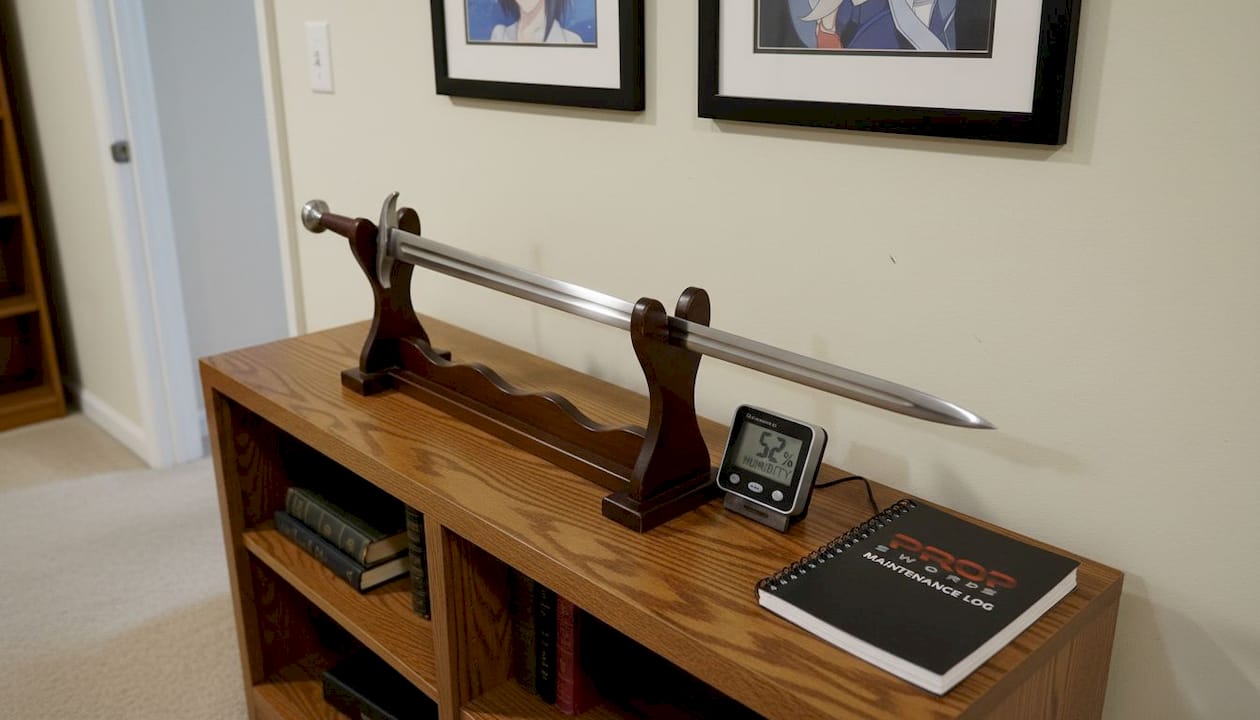
- Invest in a small hygrometer (a humidity monitor) to track your storage area. They cost under $15 and remove all guesswork.
- Consider a dehumidifier for rooms where you store multiple swords, especially in humid climates.
- Display horizontally or at a slight angle on padded mounts to reduce stress on the blade and tang.
Understanding why sword materials matter helps you tailor your storage approach to each piece. A high-carbon steel katana replica needs more climate control than a foam display prop. Knowing the difference prevents over-engineering storage for low-risk pieces and under-protecting the ones that matter most.
For display ideas that balance aesthetics and protection, exploring options for displaying replica swords gives you practical inspiration without sacrificing preservation.
The consensus among experts is that monthly inspections combined with humidity under 55% minimize rust risk dramatically over the long term.
Pro Tip: Start a simple maintenance log. Take a photo of each sword monthly and note any changes. For rare or high-value pieces, this record is invaluable if you ever need professional restoration or want to document provenance for resale.
Our take: What most sword enthusiasts overlook in maintenance
Here is something most online guides will not tell you: the biggest threat to your replica sword collection is not a lack of cleaning. It is a lack of environmental discipline. We see collectors spend hours researching the perfect oil or polishing technique, then store their swords in a humid basement or near a sunny window and undo all that work within weeks.
Generic cleaning videos on social media are another trap. They often show aggressive polishing methods that work on cheap hardware store blades but strip protective coatings from detailed replica finishes. Following that advice on a limited-edition anime replica can ruin what makes it special.
Our sword care expertise points to one truth that experienced collectors learn the hard way: knowing when not to touch a sword is just as valuable as knowing how to clean one. If a piece shows signs of deep corrosion or structural issues, putting it down and calling a professional is the right move. Preservation is the goal, not a perfect cleaning session.
Enhance your collection with expert resources
You now have a solid foundation for keeping your replica swords in top shape. The next step is making sure your collection is built on quality pieces worth protecting in the first place.

At Propswords, you will find a carefully curated selection of anime, movie, and historical replica swords built to display-worthy standards. Whether you are adding to an existing collection or starting fresh, the site offers detailed product information to help you choose with confidence. You can also explore guides on top anime replicas to find your next favorite piece. Free shipping within the USA makes it even easier to grow your collection without compromise.
Frequently asked questions
How often should I clean my replica sword?
Monthly inspections and cleaning minimize rust risk, so aim for at least once a month or after every event where the sword was handled or displayed.
Can I use regular household polish on my replica sword?
Avoid household polish entirely. Improper agents damage replica finishes, so stick to products specifically recommended for sword metals or the material your replica is made from.
What's the best way to prevent rust or tarnish?
Keep humidity under 55%, always handle with cotton gloves, and apply only a thin film of mineral or camellia oil to metal blades after each cleaning.
Should I touch my sword with bare hands during maintenance?
No. Cotton gloves prevent corrosion from fingerprints and skin oils, which is especially critical for high-carbon steel blades that oxidize quickly on contact.