

Guns may dominate modern action films, but nothing commands a scene quite like a sword. From the moment Excalibur is pulled from the stone to the electric hum of a lightsaber igniting in a dark corridor, blades carry a weight that firearms simply cannot replicate. Swords serve as powerful storytelling tools in cinema, symbolizing far more than violence. They represent legacy, identity, and the deepest conflicts a character faces. This article breaks down exactly why swords remain the most emotionally resonant weapons in film history, from Star Wars and Lord of the Rings to Kill Bill.
Table of Contents
- Why swords endure in cinema
- Iconic swords: From Excalibur to lightsabers
- Swords as storytelling engines
- Behind the blade: Craft, choreography, and realism
- The legacy of movie swords: Fandom, collecting, and beyond
- Bring cinematic sword legends home
- Frequently asked questions
Key Takeaways
| Point | Details |
|---|---|
| Swords shape film stories | They provide visual and narrative depth that few props can match in cinema. |
| Symbolic and cultural power | Swords represent legacy, character conflict, and universal themes across genres. |
| Fandom and collecting thrive | Fans keep sword lore alive by collecting, displaying, and celebrating replicas. |
| Cinematic tradition adapts | Modern films evolve sword tropes (lightsabers), but keep their core meaning intact. |
Why swords endure in cinema
Swords have been around for thousands of years, and that history is exactly what makes them so effective on screen. When a character draws a blade, audiences instinctively feel the weight of tradition, duty, and consequence. No other weapon carries that kind of cultural baggage, and filmmakers know it.
The reasons swords persist in cinema go beyond aesthetics:
- Historical resonance: Swords connect stories to ancient codes of honor and warrior culture.
- Personal scale: Unlike bombs or guns, a sword fight is intimate. Two people, face to face, deciding everything.
- Visual storytelling: The design of a blade, its color, its condition, tells you who the character is before they speak a word.
- Symbolic flexibility: A sword can mean justice, tyranny, sacrifice, or rebirth depending on who holds it.
As noted in famous movie swords research, swords reflect honor, legacy, and intimate conflict in ways that feel universal across cultures and time periods.
"A sword in film is never just a weapon. It is a mirror held up to the character wielding it."
The best lightsaber duels in Star Wars prove this point perfectly. Each duel is less about combat and more about the emotional stakes between characters.
Pro Tip: Next time you watch a film with a sword scene, pay attention to the blade itself. Is it ornate or plain? Pristine or battle-worn? Filmmakers use these details deliberately to signal character values and story themes.
Iconic swords: From Excalibur to lightsabers
With an understanding of swords' symbolic roots, let's look at the most legendary swords on film and how their representations constantly evolve.
Here is a quick comparison of classic fantasy swords versus futuristic energy blades:
| Feature | Classic fantasy swords | Futuristic swords (lightsabers) |
|---|---|---|
| Appearance | Steel, ornate, often ancient | Glowing energy blade, sleek hilt |
| Narrative use | Inheritance, destiny, kingship | Power struggle, moral alignment |
| Symbolism | Legacy, honor, earthly conflict | Cosmic balance, spiritual duality |
| Audience feel | Grounded, historical weight | Awe-inspiring, mythic scale |
Some of the most iconic swords in film history include:
- Excalibur (Excalibur, 1981): The ultimate symbol of rightful leadership and divine authority.
- Andúril (Lord of the Rings): Reforged from a broken blade, it represents renewal and the reclaiming of identity.
- The Bride's katana (Kill Bill): Precision, revenge, and feminine power distilled into a single weapon.
- Luke's lightsaber (Star Wars): Passed down like a family heirloom, it carries generational trauma and hope.
You can explore more iconic movie sword examples to see how each blade reflects its story's core themes. For collectors looking to own a piece of that legacy, a guide to authentic replicas is a great starting point.
The lightsaber evolution is a perfect case study: George Lucas deliberately modeled lightsaber combat on classic kendo and samurai sword traditions, proving that even futuristic weapons borrow their emotional power from ancient blades.
Swords as storytelling engines
But what makes these cinematic swords so powerful for storytelling? Let's break down their active roles within the plot and character journeys.
There are three core ways swords drive narrative forward:
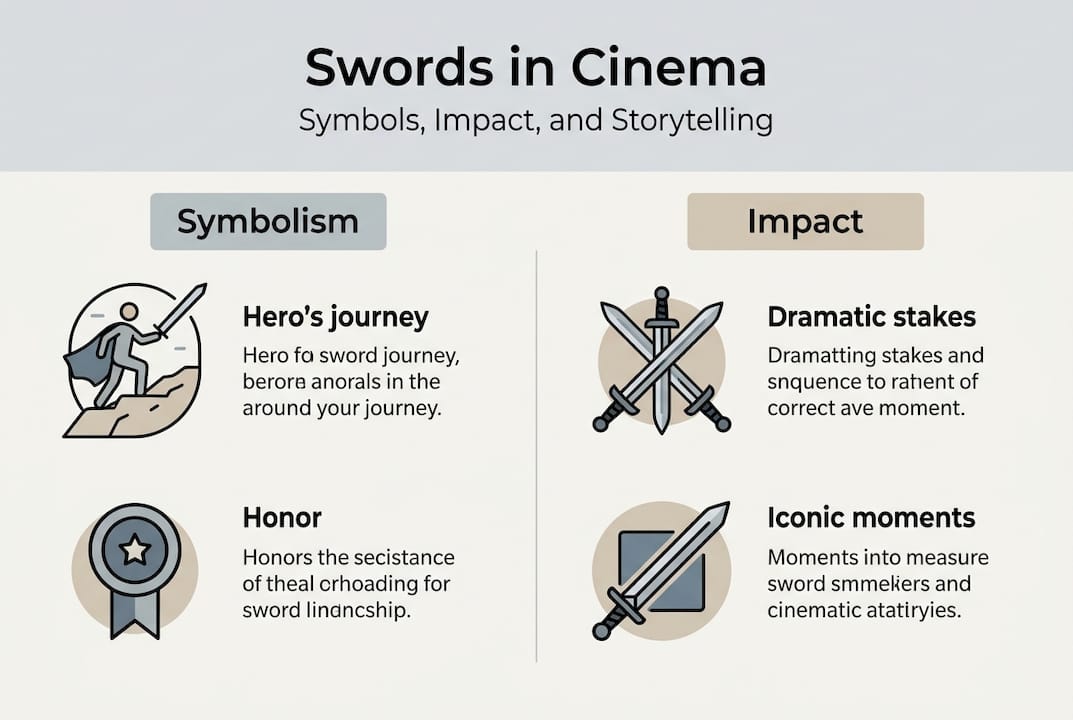
- Escalating conflict: A sword drawn signals a point of no return. The moment steel clears the scabbard, the story shifts into a higher gear. There is no talking your way out after that.
- Revealing character: How a character fights tells you everything. Aragorn's controlled, defensive style in Lord of the Rings shows restraint and wisdom. The Bride's relentless precision in Kill Bill shows obsession and grief.
- Symbolizing transformation: When a character earns, loses, or destroys a sword, it marks a turning point. Think of Anakin Skywalker's descent or Frodo's reluctant courage with Sting.
"The duel between Darth Vader and Luke Skywalker in Return of the Jedi is not a fight. It is a son refusing to become his father."
Lightsaber duels encapsulate power struggles and fateful betrayals in ways that pure action sequences never could. The sword fight becomes a conversation, one where every parry and thrust carries emotional meaning.
Understanding the motivations for sword fandom helps explain why fans return to these scenes again and again. And for those who want to go deeper, story-driven replica insights reveal how collectors connect emotionally with the blades they choose to own.
Behind the blade: Craft, choreography, and realism
To appreciate cinematic swords fully, it is worth peeking behind the scenes to understand what makes these weapons believable and iconic on screen.
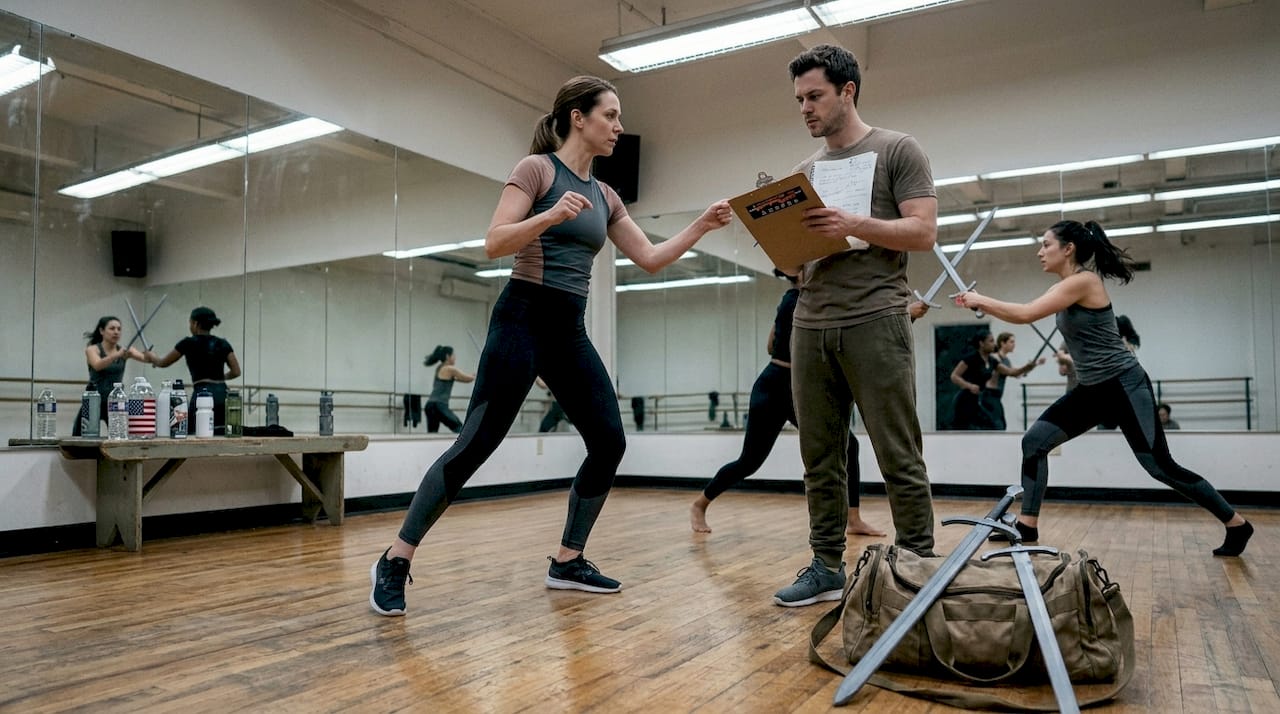
Filmmakers use several types of sword props depending on the scene's needs:
| Prop type | Material | Primary use | Realism level |
|---|---|---|---|
| Foam/rubber | Soft foam core | Stunt safety, close contact | Low |
| Stunt steel | Flexible steel | Action sequences | Medium |
| Hero piece | High-grade steel or resin | Close-up shots, display | High |
| CGI blade | Digital overlay | Lightsabers, fantasy effects | Variable |
Choreographers are the unsung heroes of great sword scenes. The team behind Kill Bill trained Uma Thurman for months in authentic Japanese sword techniques. The Lord of the Rings fight coordinators studied historical European swordsmanship to give each character a distinct fighting style. Star Wars brought in martial arts experts to make lightsaber combat feel grounded despite its fantastical nature.
As movie sword replicas explained in detail, sword replicas can range from purely decorative to authentic, film-worthy artifacts, and the same spectrum applies to on-screen props.
Pro Tip: Watch for footwork in sword fight scenes. Realistic choreography shows fighters moving their feet constantly, maintaining balance and distance. Stylized fights often sacrifice footwork for visual drama. Neither is wrong, but spotting the difference tells you a lot about the film's priorities.
For fans who want to own a piece of that craftsmanship, exploring best replica swords is a natural next step. The replica display value of a well-crafted hero piece is genuinely impressive in any collection.
The legacy of movie swords: Fandom, collecting, and beyond
Stepping away from the screen, let's see how movie swords leave a mark on audiences and fan culture.
The influence of cinematic swords extends far beyond the theater:
- Cosplay communities have built entire identities around specific blades, from Andúril at fantasy conventions to lightsabers at Star Wars Celebration events.
- Online fan forums dedicate thousands of posts to analyzing sword symbolism, fight choreography, and prop authenticity.
- Collecting culture has grown into a serious hobby, with fans seeking high-quality replicas that honor the craftsmanship of the original props.
- Convention circuits regularly feature sword-focused panels, prop showcases, and cosplay competitions centered on iconic blades.
- Pop culture crossovers happen constantly, with Star Wars fandom inspiring theme park experiences built entirely around the lightsaber mythos.
Collectors prize movie swords for their story-rich legacy and visual appeal, and that passion drives a thriving global market for high-quality replicas. The sword is not just a prop. It is a cultural artifact that fans want to hold, display, and share.
For those thinking about displaying swords at home, the options are genuinely exciting. And if you want to compare styles before committing, movie-inspired sword comparisons break down the differences between popular replicas in clear, practical terms.
The bond between fiction and real-world inspiration is what keeps sword culture alive. A replica of Andúril on your wall is not just decoration. It is a daily reminder of a story that moved you.
Bring cinematic sword legends home
If reading about these legendary blades has sparked something in you, you are not alone. Millions of fans feel that same pull toward owning a piece of the stories they love.

At Propswords, we specialize in exactly that connection. Whether you are drawn to the mythic weight of fantasy blades or the sleek power of sci-fi energy weapons, our collection covers the full spectrum of cinematic sword history. You can discover movie sword replicas across dozens of iconic styles, all crafted with the detail and quality that serious collectors and passionate fans expect. If you want a curated starting point, our top replica picks highlight the most popular and story-rich options available right now. Free shipping within the USA makes it even easier to bring a legend home.
Frequently asked questions
What does a sword symbolize in films?
A sword in film often stands for courage, honor, legacy, or the personal struggles faced by the hero. As explored in famous movie swords research, blades reflect intimate conflict and cultural identity in ways that resonate across every genre.
Why are lightsabers included in discussions about swords in cinema?
Lightsabers evolve the sword archetype, preserving its narrative and symbolic roles in a modern sci-fi setting. The lightsaber evolution draws directly from samurai and kendo traditions, making it a natural extension of the sword's cinematic legacy.
What makes a cinematic sword fight memorable?
A great sword fight combines choreography, character stakes, and symbolic tension, making the scene resonate beyond pure action. The best lightsaber fights in Star Wars demonstrate how emotional weight transforms combat into storytelling.
Why do movie fans collect sword replicas?
Fans collect sword replicas to connect with their favorite stories and relive iconic scenes from cinema. Collectors prize movie swords for their story-rich legacy and the tangible link they create between fiction and everyday life.